


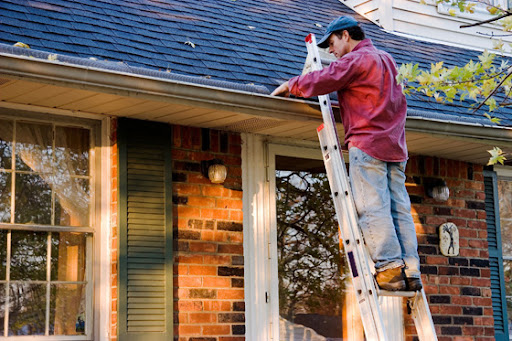
Cleaning your gutters and trimming the trees may not sound extraordinary, but when the weather turns bad outside, those seemingly insignificant duties become your home's armor.
Check out these nine tips that will get your home ready for a natural catastrophe.
1. Clean Gutters to Prevent Water Damage
But clogged gutters mean storm water can overflow, saturating — and possibly penetrating — your home's foundation. Gutter build-up can also contribute to water seeping into your attic and damaging walls.
2. Protect Your Roof from Storm Damage by Trimming Trees
Tree limbs break away and fall. If huge tree limbs are dangling over your house, you're at risk for major roof damage. Cut back limbs to reduce their weight.
3. Install a French Drain to Keep Storm Water Away
A French drain — named after a guy named French, not the country — is a slightly sloped trench (1 inch per 8 feet) filled with round gravel and a pipe that diverts water away from your house.
The drain can be shallow or deep depending on whether you've got a soggy lawn or a bigger problem with water entering your basement during heavy storms.
4. Prepare for a Power Outage with a Generator
Invest in either a portable or standby generator, depending on how much you want to spend and how much power you need.
5. Prevent Fires with Hardscaping and a Tidy Yard
You can deprive flames of fuel by keeping the grass short and irrigated, removing dry leaves and dead plants, and pruning dead branches.
6. Install Impact-Proof Doors and Windows
Impact-resistant windows, doors, and garage doors can inhibit high winds that cause structural damage from entering your home.
7. Update Your Insurance
Once a year, review your homeowner's insurance to make sure you can rebuild your whole house in case of a disaster.
8. Check Fire Extinguishers
While a fire extinguisher doesn't technically expire, its seal can weaken over time, causing the pressure to drop and rendering it useless. Check that the locking pin is intact and the pressure gauge or indicator is pointing to "full." (Sometimes this is a green bar.
9. Pick Wildfire-Wise Plants
Plants with stems that contain wax, terpenes, or oils are super flammable — as are junipers, hollies, eucalyptus, and pines.
Particularly if you live in a wildfire-prone area, choose fire-resistant foundation plantings like azalea, boxwood, hydrangeas, and burning bushes.
It turns out that a neat yard and clear gutters have a purpose beyond aesthetics. Make sure you do it regularly.