Welcome to the Livin The Dream Team Blog

If you're looking for real estate tips and the most up-to-date real estate trends in Marco Island and Naples, you are in the right place. From market trends to local events, and happenings our team is here to help navigate you every step of the way.

Oct. 6, 2021

Is Offering Asking Price Enough, If You’re a Buyer?

In today’s real estate market, buyers shouldn’t shop for a home with the expectation they’ll be able to negotiate a lower sales price. In a typical housing market, buyers try to determine how much less than the asking price they can offer and still get the home. From there, the buyer and seller typically negotiate and agree on a revised price somewhere in the middle.

Things Are Different Today

Today’s housing market is anything but normal. According to the National Association of Realtors (NAR), homes today are:

  • Receiving an average of  3.8 offers
  • Selling in just 17 days

Homes selling quickly and receiving multiple offers highlight how competitive the housing market is right now. This is due, in large part, to the low supply of homes for sale. Low supply and high demand mean homes often sell for more than the asking price. In some cases, they sell for a lot more. Selma Hepp, Deputy Chief Economist at CoreLogic, explains how these stats can impact buyers:

“The imbalance between robust demand and dismal availability of for-sale homes has led to continual bidding over asking prices, which reached record levels in recent months. Now, almost 6 in 10 homes listed are selling over the asking price.”

You May Need To Rethink How You Look at a Home’s Asking Price

What does that mean for you? If you’ve found your dream home, you need to be realistic about today’s housing market and how that impacts the offer you’ll make. Offering below or even at a home’s asking price may not cut it. In today’s market, the highest bidder often wins the home, much like at an auction.

Currently, the asking price is often the floor of the negotiation rather than the ceiling. If you really love a home, it may ultimately sell for more than the sellers are asking. That’s important to keep in mind as you work with your agent to craft an offer.

Understand An Appraisal Gap Can Happen

Because of today’s home price appreciation and the auction-like atmosphere in the selling process, appraisal gaps – the gap between the price of your contract and the appraisal for the house – are more frequent.

According to data from CoreLogic:

“Beginning in January 2020, nationally, 7% of purchase transactions had a contract price above the appraisal, but by May 2021, the frequency had increased to 19% of purchase transactions.”

When this happens, your lender won’t loan you more than the home’s appraised value, and the seller may ask you to make up the difference out of pocket. Buyers in today’s market need to be prepared for this possibility. Know your budget, know what you can afford, and work with a trusted advisor who can offer expert advice along the way.

Bidding wars and today’s auction-like atmosphere mean buyers need to rethink how they look at the asking price of a home. Work with a real estate professional who can advise you on the current market and help determine what the market value is on your dream home. Send our team a message today here.

Sept. 29, 2021

Can Your Home Address What You Need to Effectively Work from Home?

A lot has changed over the past year. For many people, the rise in remote work influenced what they’re looking for in a home and created a greater appetite for a dedicated home office. Some professionals took advantage of the situation and purchased a bigger home. Other people thought working from home would be temporary, so they chose to get creative and make the space they already had work for them. But recent headlines indicate working from home isn’t a fad.

If you’re still longing for a dedicated home office, now may be the time to find the home that addresses your evolving needs. More and more companies are delaying their plans to return to the office – others are deciding to remain fully remote permanently. According to economists from Goldman Sachs in a recent article from CNN:

“Job ads increasingly offer remote work and surveys indicate that both workers and employers expect work from home to remain much more common than before the pandemic.”

Other experts agree. A survey conducted by Upwork of 1,000 hiring managers found that due to the pandemic, companies were planning more remote work now and in the years to come. Upwork elaborates:

“The number of remote workers in the next five years is expected to be nearly double what it was before COVID-19: By 2025, 36.2 million Americans will be remote, an increase of 16.8 million people from pre-pandemic rates.”

How Does This Impact Homeowners?

If you own your home, it’s important to realize that continued remote work may give you opportunities you didn’t realize you had. Since you don’t need to be tied to a specific area for your job, you have more flexibility when it comes to where you can live.

If you’re one of the nearly 23% of workers who will remain 100% remote: 

You have the option to move to a lower cost-of-living area or the location of your dreams. If you search for a home in a more affordable area, you’ll be able to get more homes for your money, freeing up more options for your dedicated office space and additional breathing room.

You could also move to a location where you’ve always wanted to live – somewhere near the beach, the mountains, or simply a market that features the kind of weather and community amenities you’re looking for. Without your job tying you to a specific location, you’re bound to find your ideal spot.

If you’re one of the almost 15% of individuals who will have a partially remote or hybrid schedule:

Relocating within your local area to a home that’s further away from your office could be a great choice. Since you won’t be going in to work every day, a slightly longer commute from a more suburban or rural neighborhood may be a worthy trade-off for a home with more features, space, or comforts.

If ongoing remote work is changing what you need in a home, work with a local real estate professional to find one that delivers on your new wish list. Send our team message here.

Sept. 22, 2021

Do You Really Need 20% Down Payment to Buy a House?

There’s a common misconception that, as a homebuyer, you need to come up with 20% of the total sale price for your down payment. A recent survey by Lending Tree asks what is keeping consumers from purchasing a home. For over half of those surveyed, the ability to afford a down payment is the biggest hurdle.

That may be because those individuals assume a 20% down payment is necessary. While putting more money down if you’re able can benefit buyers, putting 20% down is not mandatory. As Freddie Mac puts it:

“The most damaging down payment myth—since it stops the homebuying process before it can start—is the belief that 20% is necessary.”

If saving that much money sounds overwhelming, you might be ready to give up on the dream of homeownership before you even begin – but you don’t have to. According to the Profile of Home Buyers and Sellers from the National Association of Realtors (NAR), the median down payment hasn’t been over 20% since 2005. It may sound surprising, but today’s average down payment is only 12%. That number is even lower for first-time homebuyers, whose average down payment is only 7%.

As the graph shows, the only groups who put 20% or more down on average are older homebuyers who likely can use the sale of an existing home to fuel a larger down payment on their next home.

What does this mean for you?

If you’re a prospective homebuyer, it’s important to know you don’t have to put the full 20% down. And while saving for any down payment amount may feel like a challenge, keep in mind there are programs for qualified buyers that allow them to purchase a home with a down payment as low as 3.5%. There are also options like VA loans and USDA loans with no down payment requirements for qualified applicants.

To understand your options, you do need to do your homework. If you’re interested in learning more about down payment assistance programs, information is available through sites like downpaymentresource.com. Be sure to also work with a real estate advisor from the start to learn what you may qualify for in the homebuying process.

Don’t let the myth of the 20% down payment end your home buying process before it begins. If you want to purchase a home this year, reach out to a trusted real estate professional to start the conversation and explore your options. Send our team an email here.

Sept. 15, 2021

How to Finance Your Home Improvements

Homeowners around the country are looking to make the most of their houses, from simple home improvement projects to large-scale remodels. The National Association of REALTORS® (NAR) reported in 2019 that a whopping 74% of homeowners are more eager to return to their homes when restoration projects are completed. Even the most basic house upgrades, however, come at a cost.

Here’s how to finance your home improvement projects, regardless of size, scope, or budget.

Home Improvement Personal Loan

If you're looking to finance a small home repair project, a personal loan tailored to those expenditures may be the best option. For example, if you want to update your HVAC system or get new siding, this loan could help. Because loan rates normally range from 3 to 36 percent, you'll need to locate alternative financing for larger projects (Bankrate, 2021).

Banks, credit unions, and other financial organizations offer personal loan choices. The lender, and your financial position, including your credit score, will determine the interest rates, fees, payback terms, and allowed payout amount. To qualify, you'll usually need a credit score of at least 640, and interest rates often decrease as credit improves (Investopedia, 2021).

Home Equity Line of Credit

If you’re planning longer-term home improvements, like renovating multiple rooms in your home or completing a project whose scope or cost is variable, you may want to explore a home equity line of credit or HELOC. These open lines of credit allow owners to repeatedly borrow against their home equity as opposed to providing one payout in a set dollar amount. In other words, with a HELOC, you can borrow what you need when you need it, up to a pre-determined limit.

Home Equity Loan

If you’re more confident that you know just how much your planned improvements will cost, a home equity loan (HEL) could be right for you.

Interest rates are also typically fixed, meaning that monthly repayment amounts will not change over the life of the loan. Keep in mind, though, that your home will be up as collateral. In cases of default, you could potentially lose the property. These loans can also come with a wide range of upfront costs and fees, so you may want to shop around for the right option.

If you want to find out more about this topic or you have more real estate-related questions, just send us a message here


Posted in Home Improvement
Sept. 8, 2021

9 Storm-Proofing Tips for Your Home

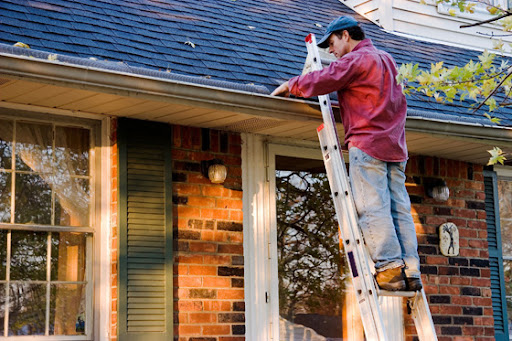
Cleaning your gutters and trimming the trees may not sound extraordinary, but when the weather turns bad outside, those seemingly insignificant duties become your home's armor.

Check out these nine tips that will get your home ready for a natural catastrophe.

1. Clean Gutters to Prevent Water Damage

But clogged gutters mean storm water can overflow, saturating — and possibly penetrating — your home's foundation. Gutter build-up can also contribute to water seeping into your attic and damaging walls.

2. Protect Your Roof from Storm Damage by Trimming Trees

Tree limbs break away and fall. If huge tree limbs are dangling over your house, you're at risk for major roof damage. Cut back limbs to reduce their weight.

3. Install a French Drain to Keep Storm Water Away

A French drain — named after a guy named French, not the country — is a slightly sloped trench (1 inch per 8 feet) filled with round gravel and a pipe that diverts water away from your house.

The drain can be shallow or deep depending on whether you've got a soggy lawn or a bigger problem with water entering your basement during heavy storms.

4. Prepare for a Power Outage with a Generator

Invest in either a portable or standby generator, depending on how much you want to spend and how much power you need.

5. Prevent Fires with Hardscaping and a Tidy Yard

You can deprive flames of fuel by keeping the grass short and irrigated, removing dry leaves and dead plants, and pruning dead branches.

6. Install Impact-Proof Doors and Windows

Impact-resistant windows, doors, and garage doors can inhibit high winds that cause structural damage from entering your home. 

7. Update Your Insurance

Once a year, review your homeowner's insurance to make sure you can rebuild your whole house in case of a disaster.

8. Check Fire Extinguishers

While a fire extinguisher doesn't technically expire, its seal can weaken over time, causing the pressure to drop and rendering it useless. Check that the locking pin is intact and the pressure gauge or indicator is pointing to "full." (Sometimes this is a green bar.

9. Pick Wildfire-Wise Plants

Plants with stems that contain wax, terpenes, or oils are super flammable — as are junipers, hollies, eucalyptus, and pines.

Particularly if you live in a wildfire-prone area, choose fire-resistant foundation plantings like azalea, boxwood, hydrangeas, and burning bushes.

It turns out that a neat yard and clear gutters have a purpose beyond aesthetics. Make sure you do it regularly.


Posted in Home Improvement
Aug. 31, 2021

Is Offering More Than the Asking Price Good for You in the Seller's Market?

Record-low interest rates and low supply have boosted demand across the country in the last year. In other words, more people are buying than ever before. Since it's a seller's market, buyers may need to go above and beyond to stand out. Offering the above-asking price is a popular differentiating strategy, albeit it isn't suited for everyone.

How would you know if that strategy is right for you? By answering the following questions below you will determine if you can make that move. 

Is it within your budget?

If you can afford it, you may offer more than the asking price. Your budget will always come first when you're buying a home. Whatever you add to the asking price, make sure that it will fit into the bigger financial picture.

Are you in a competitive market?

While markets are still heating up across the country, purchasing in certain cities will prove much more cutthroat than others. Offers may rocket up in some places, but, if you happen to be looking in less competitive areas, you may not need to propose such a generous offer

Are you in a bidding war?

If you want to win a bidding war, you may offer more than the asking price. Competing with other buyers using this strategy isn't for everyone, so be sure you're in it before you place a bid. If you decide to go above and beyond your first request, you'll need to set a hard-stop number or your absolute limit. This will aid you in sticking to a budget while competing.

Are there cash offers on the table?

Sellers tend to prioritize cash offers because they often close faster and more efficiently (NerdWallet, 2021). A study from the University of California San Diego found that sellers often opt to accept cash offers that are 12% lower than similar financed offers. So, if you’re serious about securing the home but are bidding against a cash buyer, you may need to make your offer even more enticing.

Is the seller reluctant to let the home go?

Unfortunately, some homeowners post their home just to see how it sells and has no intention of actually selling it. They may be having second thoughts in other circumstances. If the seller is hesitant to sell to anyone, a little extra cash could help you win the deal.

Do you really adore it?

Check your emotions once you've made sure that providing more than the asking price makes sense logistically. It may be a smart idea to increase your offer if this particular house feels great for you and the additional expense is justified. Just keep in mind that the ideal home is always within your budget. It wasn't meant to be if the seller rejects your offer or the bidding war becomes too heated.

Buying a house is most likely be one of the biggest investments in your life, so before proposing an offer above the asking price, you’ll want to ensure it’s the right move for you.  

Contact our team today so that we can guide you in this uncertain market. 


Aug. 25, 2021

5 Practical Questions for First-time Homebuyers

When buying your first home, it's important not to let emotional factors supersede practical considerations. After all, this is most likely the most expensive purchase you will make in your lifetime. 

Here are five practical questions that you may ask yourself as a first-time homebuyer

Can You Afford This House?

Not because you've been told you qualify for that 2,500-square-foot home on a one-acre lot doesn't mean you should buy it. Doing so may cause financial difficulties in the long run. If all of your money goes to maintain your home, it may quickly become a source of resentment. What's more important than what you qualify for is what you actually can afford.

Does It Fit Your Lifestyle?

Consider more than the floor plan and amenities. Make sure the home fits your lifestyle and the things that matter to you and your family if you have one—whether it's a short commute to work or being near extended family.

What Will Your Future Self Want?

Think of yourself for five or ten years.  Consider your plans, for having children, for example.  If you don't consider that possibility now, you could end up purchasing a starter home that won't meet the needs of a growing family or that is unsuitable for small kids.

Has the Property Been Maintained?

First-time buyers are better off purchasing a home that has been properly maintained and doesn't require a lot of repairs or upkeep. Just routine maintenance for a home is costly, not to mention repairs and remodeling. If major repairs or replacements are needed, it might be best to move onto better-maintained properties and do not skip home inspection.

Do You Have an Exit Strategy?

That means you will want to have an exit strategy for the property you are purchasing, whether that means choosing a home that will be easy to rent in the future or one in a good neighborhood or school district that can easily be sold.

Homeownership can be empowering, but it's also a daunting process, especially for first-time buyers. Mistakes are all around on the path to homeownership, but many can be avoided.

Contact our team today if you need assistance with your home-buying process. 


Aug. 17, 2021

5 Things You Need to Get Your Mortgage Application Pre-Approved

In the current real estate trends, sellers are highly in control and buyers are literally at war. Bidding war

Apart from enticing offers, letting the seller know how serious you are can make you one step ahead. One of the ways to show how serious you are is to be pre-approved for a mortgage. 

So how do you do that? 

To get pre-approved for a mortgage, you'll need five things below: 

1. Proof of Income

Buyers generally must produce W-2 wage statements from the past two years, recent pay stubs that show income as well as year-to-date income, proof of any additional income such as alimony or bonuses, and the two most recent years' tax returns.

2. Proof of Assets

The borrower needs bank statements and investment account statements to prove that they have funds for the down payment and closing costs, as well as cash reserves.

3. Good Credit

Most lenders require a FICO score of 620 or higher to approve a conventional loan, and some even require that score for a Federal Housing Administration loan.7 Lenders typically reserve the lowest interest rates for customers with a credit score of 760 or higher.8 FHA guidelines allow approved borrowers with a score of 580 or higher to pay as little as 3.5% down.

Those with lower scores must make a larger down payment. Lenders will often work with borrowers with a low or moderately low credit score and suggest ways to improve their score.

4. Employment Verification

Lenders want to make sure they lend only to borrowers with stable employment. A lender will not only want to see a buyer's pay stubs but also will likely call the employer to verify employment and salary. A lender may want to contact the previous employer if a buyer recently changed jobs.

Self-employed buyers will need to provide significant additional paperwork concerning their business and income.

5. Other Documentation 

The lender will need to copy the borrower's driver's license and will need the borrower's Social Security number and signature, allowing the lender to pull a credit report. 

Getting professional advice before beginning the home-buying process can help you avoid disappointments. Gather the documents that you need before your pre-approval appointment. The more cooperative you are, the smoother the process. 

If you need help, let us know by sending us a message here

Aug. 10, 2021

What is a Loan Originator?

To make an informed decision when it comes to your homebuying team, you’ll want to intimately understand which piece of the puzzle is held by each party. While you may be familiar with the role a real estate agent plays, the job of a loan originator may be more of a question mark. Read on for the role your loan originator will play in your journey to homeownership, as well as what you can expect while working with them.  

What is a Loan Originator?

A Loan Originator or Mortgage Loan Originator (MLO) is the front door to the mortgage getting process. An MLO has two jobs; the first is to persuade you that their lending prowess is your best borrowing option. The second is to help you navigate your way to the closing table. A Loan Originator is a salesperson first and a loan approval chaperon second.

What does a loan originator do?

The loan originator works with borrowers to evaluate loans and helps to ensure that the loan gets funded when needed. To do so, loan originators find lender programs that match the borrower’s situation, and they guide applicants through the process. They help clients gather information needed to close a loan, verify that information, and coordinate when any questions come up during underwriting. 

They may also collect your credit score and other necessary documentation, provide applicable loan options, answer financing questions and negotiate on your behalf. 

What does working with a loan originator look like?

Like any member of your homebuying team, your loan originator is there to make your experience smooth and streamlined. The right loan originator will possess relevant experience, provide support in stressful situations and communicate effectively. They might also save you money. According to a 2018 Freddie Mac study, nearly half of all homebuyers forgo shopping for better rates (Freddie Mac, 2018). A good loan originator can help connect you with the right loan and ensure you’re not leaving money on the table.

Your Loan Originator is an important piece of your home ownership puzzle. A home will likely be the biggest investment of your life, so you’ll want to make sure you have the right people on your team. Just like your real estate agent, aim to find a good fit when it comes to your loan originator for a streamlined and enjoyable home financing experience.

Got real estate-related questions? Send our team a message here and I will be glad to help you.


Aug. 4, 2021

6 Top Home-Buying Myths: Busted

You don't believe you're ready to buy a house yet? That you're emotionally ready but not financially. Or you're not confident because of the home-buying myths?

Let's debunk the following myth below. 

Myth 1: I Have to Put Down 20%

Saving 20% of the price of a home in many places isn't just a challenge; it's a roadblock. And it's not a must-do. The median down payment for first-time buyers is 7%.

Myth 2: My Low Credit Score Means I Can't Buy a Home

So, your credit could use a tune-up. That doesn't mean you have to forgo your home-buying dreams. Here are some options for those with a less-than-stellar credit score.

  • FHA loan
  • A higher down payment
  • A co-signer
  • Check your credit report

Myth 3: I Can't Afford the Agent's Commission

Here's one you can immediately mark off your worry list. Typically, the commission is paid from the proceeds of the sale via the seller.

Myth 4: My Bank Will Give Me the Best Mortgage

There are a lot of positive things to say about working with your local bank, but assuming they'll give you the best mortgage is a mistake.

Banks are only one type of home-loan lender. Others include credit unions and mortgage companies. Mortgage rates aren't the same across the board, so contact several institutions to ensure you're getting the best price.

Myth 5: I Was Pre-Approved. I Got The Loan!

You don't get the loan until:

(a) The seller accepts your offer

(b) Your lender approves the loan (which you'll need those tax docs for)

(c) You sign the loan papers 

Between (a) and (c), the lender will have the home appraised to ensure its value is in line with the purchase price, check your credit again, and ask you for more documents than you ever knew existed.

Myth 6: The Interest Rate Is What Matters Most

A low-interest rate is important, but it's not the only thing to consider. When shopping around for a loan, check the annual percentage rate (APR). It includes all loan costs, such as origination and processing fees that can vary widely from lender to lender, in addition to the interest rate.

Do you have a real estate-related questions? Send us a message here and I will be glad to help you.